Before the Champions League final in May, Real Madrid manager Carlo Ancelotti praised Liverpool, saying: “They have a lot of quality together, with high intensity and good organisation. Jurgen Klopp has brought some new things to football. He’s doing a great job.”
But after Real’s 1-0 victory in Paris, Ancelotti offered a telling insight into his team’s approach: “Liverpool were easier to decipher than others. They have a very clear identity and we could prepare the way that we did. We knew what strategy to take.”
Ancelotti’s comments reflect a broader trend highlighted in UEFA’s technical report, which analyzed 125 matches with input from 23 experts, including England manager Gareth Southgate. Real Madrid’s tactical approach bucked prevailing trends in European football, emphasizing patience, precision, and efficiency over high pressing and aggressive defending.
Real surrender space to win war
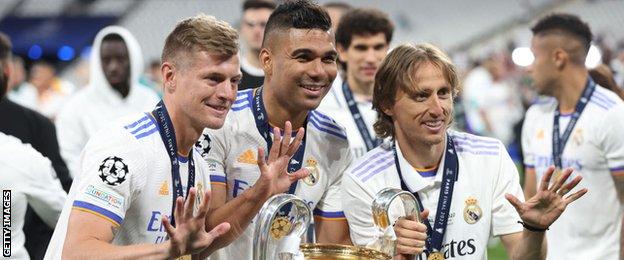
While teams like Manchester City, Bayern Munich, and Liverpool maintained extremely high defensive lines — with their last defenders averaging 45.5m, 44.4m, and 43.6m from goal, respectively — Real’s back line sat deeper at 35.2m, allowing opponents more space to advance. Only Sheriff Tiraspol and Dynamo Kyiv gave up more territory, while Chelsea, Ajax, and Atalanta offered less than Liverpool.
Former Real manager Fabio Capello noted that the approach suited the team’s veteran midfield: Casemiro, Toni Kroos, and Luka Modric were experienced and technically skilled, but not particularly fast. By controlling possession and conceding space strategically, Real maximized their strengths and minimized vulnerabilities.
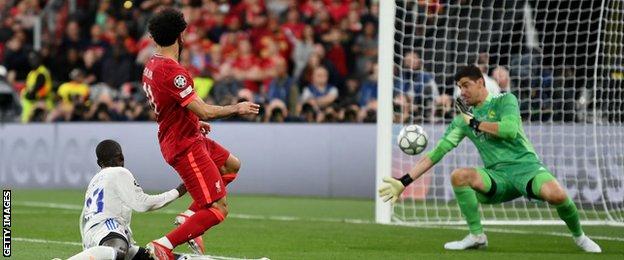
Goalkeeper Thibaut Courtois proved crucial to this approach. The former Chelsea man made nine saves in the final — the most by any goalkeeper in a Champions League final — and prevented 4.63 expected goals over the course of the tournament, topping the goals-prevented statistics. His reach and composure kept Liverpool at bay when they threatened.
Courtois’ reach helps reel in title
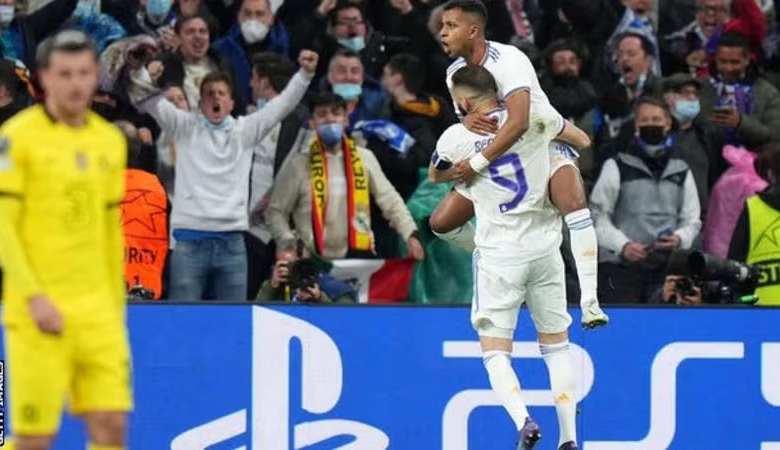
Offensively, Real were ruthlessly efficient. Karim Benzema, backed by Vinicius Junior and Rodrygo, outperformed their expected goals (xG) by scoring 29 goals from an xG of 21.78 after the group stage. Their attacking style relied on patient buildup, averaging 16.2 seconds of possession per goal, compared with Liverpool’s 9.5 seconds, highlighting a contrast in philosophy: Real favored methodical, probing attacks over rapid, high-intensity transitions.
Attacking efficiency powers late comebacks
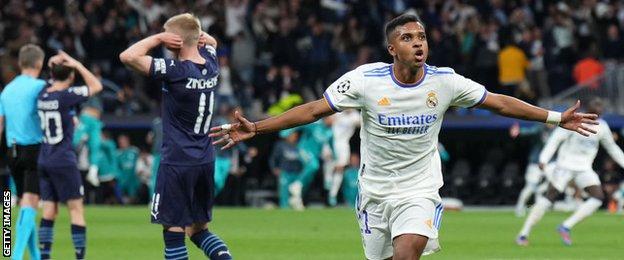
Some of Real’s success was also a matter of timing and resilience. Against PSG, Chelsea, and Manchester City, they looked close to elimination in the final stages but managed to escape and progress each time. Whether attributed to luck, mental fortitude, or both, this ability to survive tense moments defined their knockout run.
Ancelotti kept his final reflection simple: “Vinicius scored a goal, Courtois made saves, end of story!” Yet behind that simplicity lay a sophisticated mix of tactical prudence, veteran experience, and clinical finishing that ultimately allowed Real Madrid to conquer Europe once again.